
Transparent Boxes
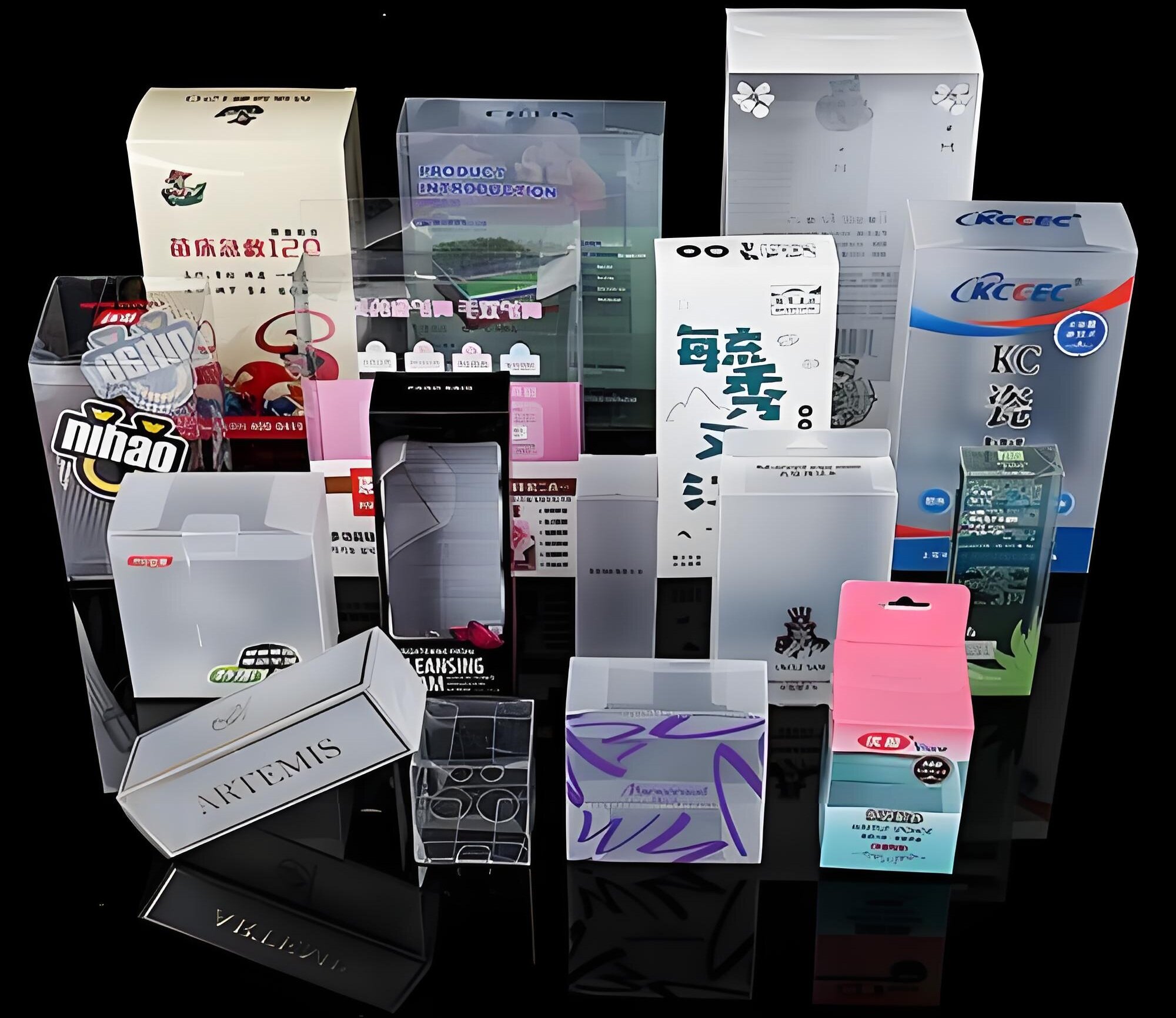
Transparent boxes show the product itself instead of describing it. Choose material, thickness, structure and print around how the pack is displayed, handled and shipped.
Technical Parameters
| Parameter | Specification |
|---|---|
| Materials | APET, PETG, PVC and PP sheet, clear or frosted |
| Thickness | 0.2–0.8 mm sheet, chosen by box size and load |
| Structures | Tuck-end folding box, sleeve, lid and base, and heat-sealed shapes |
| Printing | Screen printing or UV offset on the sheet, plus printed paper inserts |
| Transparency | Clear panels above 90% light transmission; frosted or matte options available |
| Finishing | Die-cut ventilation holes, hang tabs and rounded corners |
| Packing | Flat-packed or pre-glued, with film between units to prevent scuffs |
Customization process
Six steps from product display to flat-packed cartons, with a clear sample before the die is made.
- 1
Product and display
Share the product size, weight and how the box is displayed; we propose a structure that holds the item without extra support.
- 2
Material and thickness
APET suits most retail boxes, PETG handles deeper folds and PP resists cracking, while sheet thickness follows box size and load.
- 3
Print and finish
Screen printing covers solid brand colours and UV offset carries fine detail; areas left unprinted stay fully transparent.
- 4
Die line and sample
A clear sample confirms folds, lid fit and vent positions before the cutting die is made.
- 5
Artwork proof
A digital proof shows print position against the die line, so text and logos stay clear of folds and score lines.
- 6
Production and packing
Die cutting, creasing and gluing, then film interleaving and flat packing to prevent surface scuffs in transit.
Where these boxes are used
- Cosmetics and skincare sets
- Electronics accessories and cables
- Stationery and small gifts
- Food and confectionery packs
Product FAQ
Short answers to the questions sourcing teams ask before requesting a quotation.
Which material and thickness should I choose?
APET covers most retail display boxes in 0.3–0.5 mm; PETG is chosen when the box has deep folds or is reused, and PP resists cracking on hinged or handled packs. Thickness rises with box size and product weight, confirmed on the sample.
How does printing affect transparency?
Screen printing leaves solid brand colours opaque while unprinted areas stay clear; UV offset carries fine detail and gradients. Frosted or matte sheet gives a softer look, and printed paper inserts add product information without covering the whole panel.
How do sampling and lead time work?
A clear sample confirms folds, lid fit and vent positions before the die is made, and stock sizes can be quoted from existing tools. New dies usually take 10–15 working days after sample approval, with the schedule confirmed on the order.
Are the boxes food-grade and safe for direct food contact?
Food-grade APET and PP sheet are available for direct contact, with material declarations supplied with the order; PVC is offered for non-food applications only. Printing stays on the outer surface, and inserts placed next to food are supplied unprinted or with food-safe ink.
Is recycled rPET available, and how does it look?
rPET sheet is available for boxes that do not need to be crystal clear: it carries a faint tint and suits folded or printed formats better than display boxes for premium products. The recycled share is quoted per order and stated on the material declaration, and a clear APET sample is compared side by side before the material is fixed.
How is artwork prepared for a clear sheet?
Any colour that should read solidly needs a white ink backing, so the artwork carries a separate white layer behind those areas. Fine type below about 6pt and thin hairlines can fill in on PET, so proofs are checked on the actual sheet, and a printed sample shows how the clear areas read against the product.
Which finishing options work on clear boxes?
Spot UV works on printed areas and leaves the unprinted window clear, while hot foil reads best on a solid printed panel. Full lamination is uncommon on clear sheet because it dulls the window, so it is generally applied to printed bands only; each option is quoted with the print method and confirmed on a sample.
Ready to customize your packaging?
Send dimensions, quantity and artwork notes; our sales team replies with a quotation within one business day.
Specifications follow recognised standards: ISO 9001 quality management, FSC chain of custody, FDA food-contact requirements, SGS test reports. Figures on this page are typical values; final parameters are confirmed against the approved sample and order specification.