
PET Cups
Food-grade clear PET cups for cold drinks, desserts and bubble tea. Choose capacity, lid style and printing to match your menu and brand.
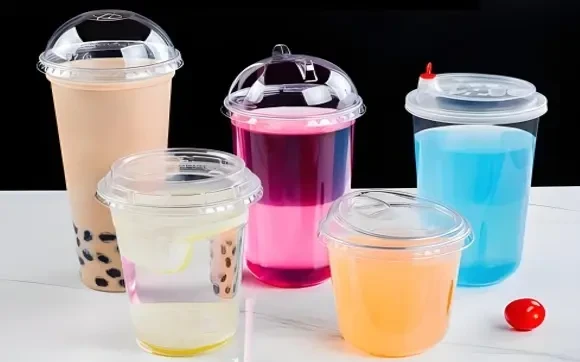
Technical Parameters
| Parameter | Specification |
|---|---|
| Material | Food-grade clear PET cups, with PP or PET lids |
| Capacity range | 12 oz to 24 oz standard, custom tooling on request |
| Top diameter | 90 mm and 95 mm standard, 98 mm on request |
| Cup wall | 0.35–0.6 mm depending on capacity |
| Lid options | Dome, flat and sip lids with optional straw slot |
| Printing | 1–6 colour flexo or offset print, matte or gloss finish |
| Packing | Sleeved or bulk cartons with food-safe liner bags |
Cup Size Chart
Typical dimensions for our standard cold cup range. Final dimensions are confirmed on the approved sample.
| Size | Capacity | Top diameter | Height | Matching lid |
|---|---|---|---|---|
| 12 oz | 360 ml | 90 mm | 108 mm | 90 mm Dome lid / Flat lid |
| 16 oz | 470 ml | 90 mm | 137 mm | 90 mm Dome lid / Flat lid |
| 22 oz | 650 ml | 90 mm | 170 mm | 90 mm Dome lid / Flat lid |
| 24 oz | 700 ml | 95 mm | 175 mm | 95 mm Dome lid / Flat lid |
Cup and lid diameters must match for a secure fit. Samples are supplied with the recommended lid so you can check fit and fill before production.
Choosing a capacity
Typical drink matches for each cup size.
12 oz
Small juices, desserts and kids' drinks.
16 oz
Iced coffee, milk tea and soft drinks.
22 oz
Bubble tea with toppings, fruit tea and large iced drinks.
24 oz
Smoothies, sharing drinks and large bubble tea.
Lid Options
Pair each cup with a lid that suits the drink, the topping and how it travels.
Dome lid
Clear dome lid for drinks with toppings, cream or fruit; straw slot on request.
Flat lid
Low-profile flat lid for juices, iced coffee and desserts; straw slot optional.
Sip lid
Vented sip lid with a resealable tab for iced coffee and tea.
- Dome, flat and sip lids with optional straw slot
- Food-grade clear PET cups, with PP or PET lids
Prepress File Requirements
Send artwork ready for production so sampling and plate making can move without extra rounds.
File format
PDF/X-4 preferred; AI or EPS accepted with all fonts outlined and images at 300 dpi or above.
Bleed and safety
3 mm bleed and a 3 mm safety margin, placed on our cup template so artwork follows the curved surface.
Spot colours
Pantone solid coated references or CMYK builds; white and metallic inks are available on request.
Proofing workflow
Digital proof for approval first, a printed sample on production cups for new artwork, then plate making and mass production.
Colours are matched against the approved Pantone reference. Small variation between print runs is normal and is checked on the approved sample.
Straws and Cup Sleeves
Complete the serve with accessories specified against your cup height, lid and drink type.
Boba straws
12 mm wide-bore straws for tapioca and toppings, cut to match your cup height, in PP or PLA.
Flat drinking straws
6 mm bore for juices, iced coffee and soft drinks, with individually wrapped options.
Cup sleeves
Corrugated or paperboard sleeves for grip and condensation control, printed to match the cup artwork.
Sleeve diameter and straw length are specified together with the cup size and lid so the set fits and travels as one unit. Accessories are quoted separately from the cups.
- Minimum order
- Straws and sleeves are quoted per size and print, so the minimum is confirmed together with your cup order instead of being fixed in the catalogue.
- Mixed packing
- Different cup sizes, lid styles and accessories can travel in one shipment, packed and labelled by size to keep warehouse picking simple.
Cold Chain and Temperature Range
PET cups are built for cold and iced drinks. Here is how they behave in chilled service and transport.
Cold and iced service
Suited to drinks served chilled or over ice, from fridge temperature up to around 50 °C at the cup wall.
Chilled storage and transport
Cups keep their shape in cold rooms and refrigerated vans. Condensation forms on the outside, so a sleeve helps grip and protects the printed artwork.
Not recommended
Hot fill, hot beverages, microwaving, dishwashing and freezing filled cups: PET softens with heat, and expanding liquid stresses the cup. Choose PP for hot drinks.
Share your service temperature and transport route when requesting a quote so cup wall and lid can be specified for your conditions.
Product FAQ
Short answers to the questions sourcing teams ask before requesting a quotation.
Will the lids fit other cup sizes?
Lids are matched by top diameter: 90 mm lids fit our 12, 16 and 22 oz cups, and 95 mm lids fit the 24 oz cup. Each size is supplied with its matching lid so the fit is checked before you order.
What is the minimum order for printed cups?
The minimum depends on cup size, print method and colour count. We confirm the exact figure once your artwork is ready, before sampling starts.
How long do samples take?
Stock samples can be arranged quickly. Custom-printed samples usually take about 5–7 working days after artwork approval; the timing is confirmed with your project schedule.
Which cup size should I choose for my drinks?
Use 12 oz for small juices, desserts and kids' drinks; 16 oz for iced coffee, milk tea and soft drinks; 22 oz for bubble tea with toppings and fruit tea; and 24 oz for smoothies and large sharing drinks.
Can lids, straws and sleeves be supplied together with the cups?
Yes. Each cup size comes with flat, dome or straw-slot lids in the matching top diameter, and straws, cup sleeves and carriers can be added to the same order. Accessories are cartoned by item, and the mixed-order minimum is confirmed together with your cup quantity.
Are the lids leak-resistant, and is the seal tested?
Lids are matched to the cup's top diameter and pressed down until the rim seats, and fit is checked on a filled sample before production. Leaks most often come from a mismatched lid diameter or an overfilled cup, so straw-slot and dome lids are best used upright during transport.
How much of the cup body can be printed, and what bleed do you need?
Artwork wraps the side wall from a curved template, with the rim and base roll left clear so the cup seats and stacks correctly. Supply files with the cup template applied and 3 mm bleed on the wrap edges, and keep text and logos inside the safe area, since a curved surface distorts designs that run full width.
Can PET cups be used for hot drinks?
These cups are made for cold and chilled drinks, with the wall suited to roughly 50°C at most. Hot filling, hot beverages, microwaving and dishwashing fall outside the recommended use; drinks served hotter are better run in PP cups, and the limit for your drink and holding time is confirmed before ordering.
How do I deal with condensation on cold drinks?
A chilled drink starts condensing on the cup wall as soon as it leaves the fridge. A corrugated or card sleeve keeps hands dry, stops the cup slipping and can carry the same artwork, and sleeves are matched to the cup diameter with the fit checked alongside the lids on your sample.
How are cups packed for transport, and how do they stack?
Cups are nested in sleeves and cartoned so the rims do not carry the load, and lids are packed in separate cartons to keep the rim undistorted. Empty cups stack inside each other for storage; once filled they should stand on a flat, level surface, as the lids are not designed to support a stack above them.
How does cup wall thickness affect stiffness and cup weight?
Wall thickness runs from 0.35 to 0.6 mm by capacity: smaller cups use the thinner end, while 22 and 24 oz cups use a thicker wall so the cup resists squeezing and keeps a round rim when stacked. A thicker wall adds a little weight per cup, which shows up in freight, so it is matched to the drink and handling rather than set to the maximum.
What tolerance applies where the lid meets the cup rim?
Lids and cups are matched by nominal top diameter, with the lid skirt sized to seat on the rim within the small tolerance typical of thermoformed parts. That is why lids are supplied with cups of the same diameter: a cup from another supplier may not seal. Keep sizes paired from one order and check the fit on a filled sample.
Is the print safe on a cup that holds drinks?
Print sits on the outer wall, and food-contact inks are used where artwork comes close to the rim or the cup is printed inside. Cups are packed in food-safe liner bags, and heavy ink coverage near the rim is checked on the sample; for direct-contact requirements the ink system is confirmed with your order.
Can you make a new cup size, and what does new tooling involve?
Standard cups cover 12 to 24 oz with 90, 95 and 98 mm top diameters. A new capacity or diameter needs a forming tool for that shape, quoted separately and sampled before production; the tool is kept for your repeat orders, and the lead time covers drawing approval, sample and tool build.
Ready to customize your packaging?
Send dimensions, quantity and artwork notes; our sales team replies with a quotation within one business day.
Specifications follow recognised standards: ISO 9001 quality management, FSC chain of custody, FDA food-contact requirements, SGS test reports. Figures on this page are typical values; final parameters are confirmed against the approved sample and order specification.