
Foldable Paper Boxes
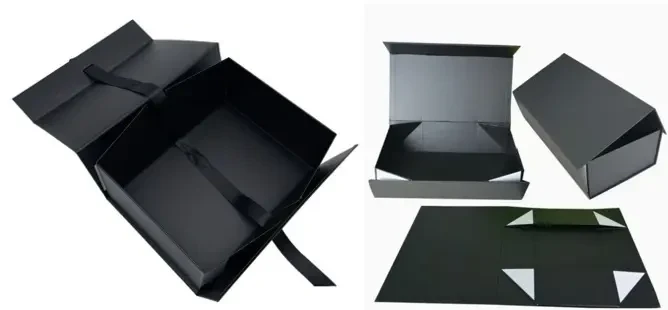
Foldable boxes ship flat and open into shape at packing. Choose board, structure and closure around how the box is filled, stacked and displayed.
Technical Parameters
| Parameter | Specification |
|---|---|
| Structures | Tuck-end, auto-lock bottom, sleeve with tray and crash-lock carton |
| Board | SBS board 250–400 gsm, kraft board or E-flute corrugated |
| Printing | Offset CMYK with spot colours, or flexo for simple kraft designs |
| Finishing | Matte or gloss lamination, spot UV and hot foil stamping |
| Closures | Tuck flaps, auto-lock base, tear strip or ribbon |
| Windows | Die-cut window with or without clear film |
| Packing | Shipped flat to save freight and storage space |
Customization process
Six steps from structure to flat-packed cartons, with a die-cut sample before printing.
- 1
Structure and size
Share product dimensions and how the box is filled; we propose a structure that opens easily on the packing line without extra gluing.
- 2
Board selection
Board weight follows product weight and stacking: 250–350 gsm for light retail items, 350–400 gsm or E-flute for heavier loads.
- 3
Print and finishing
Offset printing covers full-colour artwork and gradients, and lamination keeps the surface scuff-resistant during shipping.
- 4
Die line and white sample
A plain die-cut sample confirms scores, folds and lid fit before plates are made.
- 5
Artwork proof
A digital proof shows panel layout, bleed and window placement, with Pantone references matched at this stage.
- 6
Production and flat packing
Printing, die cutting, creasing and gluing, then flat packing in cartons so the boxes open into shape on arrival.
Where these boxes are used
- Cosmetics and skincare cartons
- Confectionery and tea boxes
- Electronics accessories and small goods
- Subscription and e-commerce mailers
Product FAQ
Short answers to the questions sourcing teams ask before requesting a quotation.
Which board weight suits my product?
250–300 gsm works for light items such as sachets and small cosmetics; 350–400 gsm holds heavier products and keeps its shape in retail display; E-flute adds rigidity for shipping or larger formats.
Which printing suits my artwork?
Offset printing is standard for full-colour artwork, gradients and photographs, with Pantone spot colours for brand colours; flexo keeps simple one or two colour kraft cartons economical.
What do you need for the die line, and how long does production take?
Send vector artwork with the die line on a separate layer, or approve the die line we draw from your dimensions. Sampling usually takes a few working days, and production about 10–15 working days after proof approval, confirmed with the order.
Are folding boxes recyclable, and which paper is the greener choice?
Uncoated folding cartons in SBS or kraft board are the easiest to recycle through standard paper collection. Lamination, spot UV and foil improve shelf presence but slow repulping, so they are best kept to the areas that need them. Recycled-content board and certified paper grades can be quoted on request, and final recyclability depends on local collection rules.
Ready to customize your packaging?
Send dimensions, quantity and artwork notes; our sales team replies with a quotation within one business day.
Specifications follow recognised standards: ISO 9001 quality management, FSC chain of custody, FDA food-contact requirements, SGS test reports. Figures on this page are typical values; final parameters are confirmed against the approved sample and order specification.